
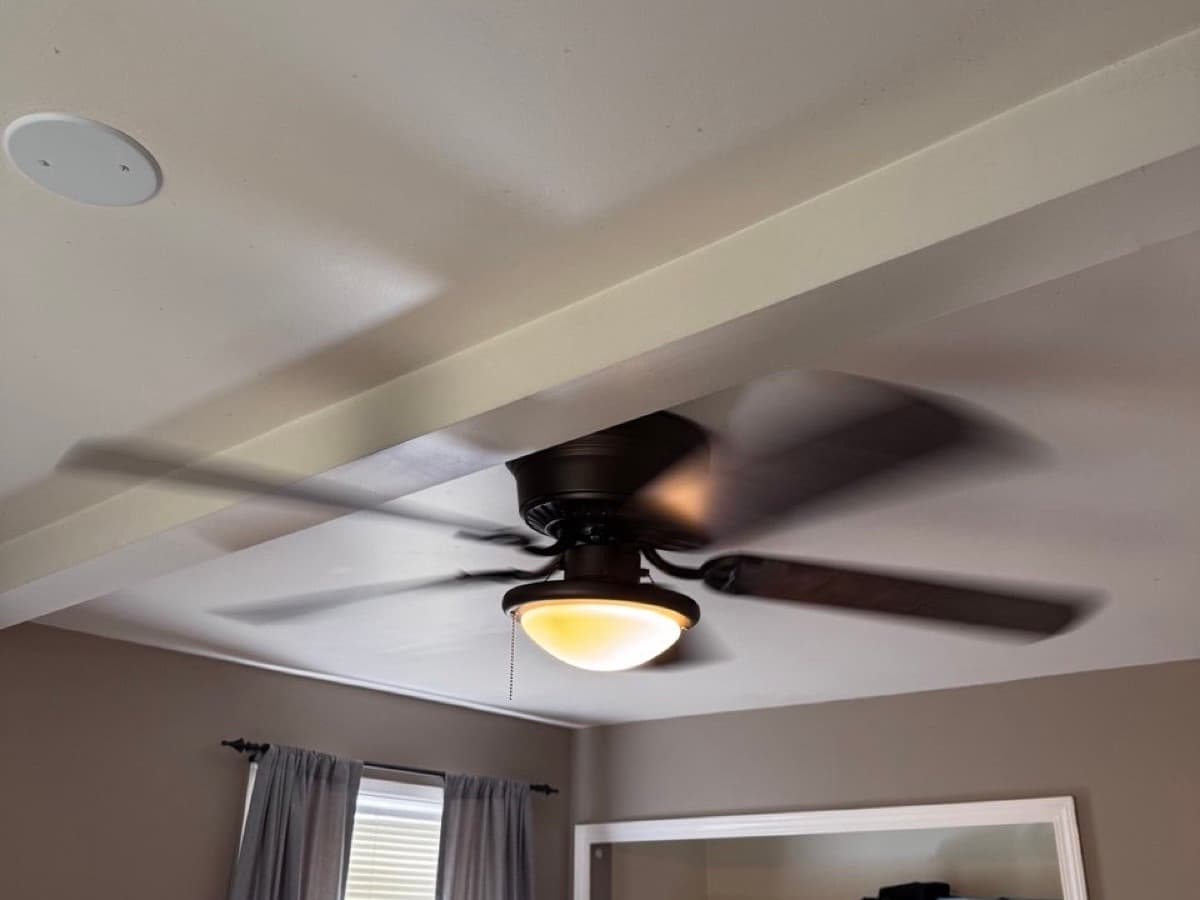
Doesn't Portland Have Mild Summers?
Traditionally, yes. But Portland's summers have been changing. The 2021 heat dome brought temperatures above 110°F to the Portland area — the hottest ever recorded. Heat events that used to be once-a-decade are becoming more frequent, and even a typical summer day in the mid-80s can make an uncirculated room uncomfortable, especially in older homes without central air.
A ceiling fan in a bedroom makes sleeping noticeably easier from June through September — without the cost of running air conditioning.
The Year-Round Case for Ceiling Fans
Most people think of ceiling fans as summer-only appliances. But fans have a reverse mode for a reason: in winter, running the fan at low speed in reverse (clockwise when viewed from below) pushes warm air that's pooled at the ceiling back down along the walls and across the floor. In rooms with high ceilings — common in Portland craftsman and older homes — this can meaningfully reduce heating costs during Portland's long, cool winters.
Energy Star estimates that ceiling fans used seasonally can reduce cooling costs by around 40% in rooms where they replace air conditioning use, and reduce heating costs by 10–15% in high-ceiling rooms in winter.
Why Installation Is Trickier Than Replacing a Light Fixture
Ceiling fans are heavier than standard light fixtures — typically 15–50 lbs depending on the model — and they vibrate during operation. A standard light fixture junction box isn't rated for that weight or movement. Using one anyway is a common mistake with serious consequences: fans fall, boxes pull out of the ceiling, and in the best-case scenario you just get persistent vibration and noise.
Fan-rated boxes (also called brace boxes) are required by NEC code for any ceiling fan installation and are designed for the load. In most homes, these aren't already in place unless a fan was previously installed there. Installing a fan in a new location almost always requires replacing or adding the junction box first.
Beyond the box: ceiling fans with a separate light kit need either a two-conductor or three-conductor circuit depending on whether you want independent wall switches for fan speed and light. Getting this right the first time avoids having to revisit the wiring later.
How to Choose the Right Size Fan
Fan blade span is matched to room size:
Up to 75 sq ft (small bedroom): 29–36 inch fan
76–144 sq ft (average bedroom): 36–42 inch fan
144–225 sq ft (large bedroom or small living room): 44–50 inch fan
225–400 sq ft (living room, open floor plan): 50–56 inch fan
Over 400 sq ft: 60+ inch fan or multiple fans
Ceiling height also determines the mounting style. Fans should have at least 7 feet of clearance from the floor. In rooms with standard 8-foot ceilings, flush-mount (hugger) fans are typically required. Rooms with vaulted or high ceilings need a downrod to bring the fan to the right operating height.
A fan that's too small for the room moves air inefficiently. One that's too large in a low-ceiling room creates an uncomfortable wind tunnel effect at normal operating speeds.
What Professional Installation Includes
A proper installation starts with confirming whether the existing junction box is fan-rated or needs to be replaced. If a swap is needed, we install a brace box secured to the ceiling joists — rated for the weight and vibration. Then the fan is assembled, wired, balanced, and tested at all speeds before we leave.
The whole process takes 1–2 hours depending on existing wiring and box condition. EVN Handyman includes box assessment and replacement as needed — we don't install fans on boxes that aren't rated for them.
We cover Portland, Beaverton, Hillsboro, Lake Oswego, and Vancouver WA. Spring and early summer are the ideal time to get a ceiling fan installed before the heat arrives.