
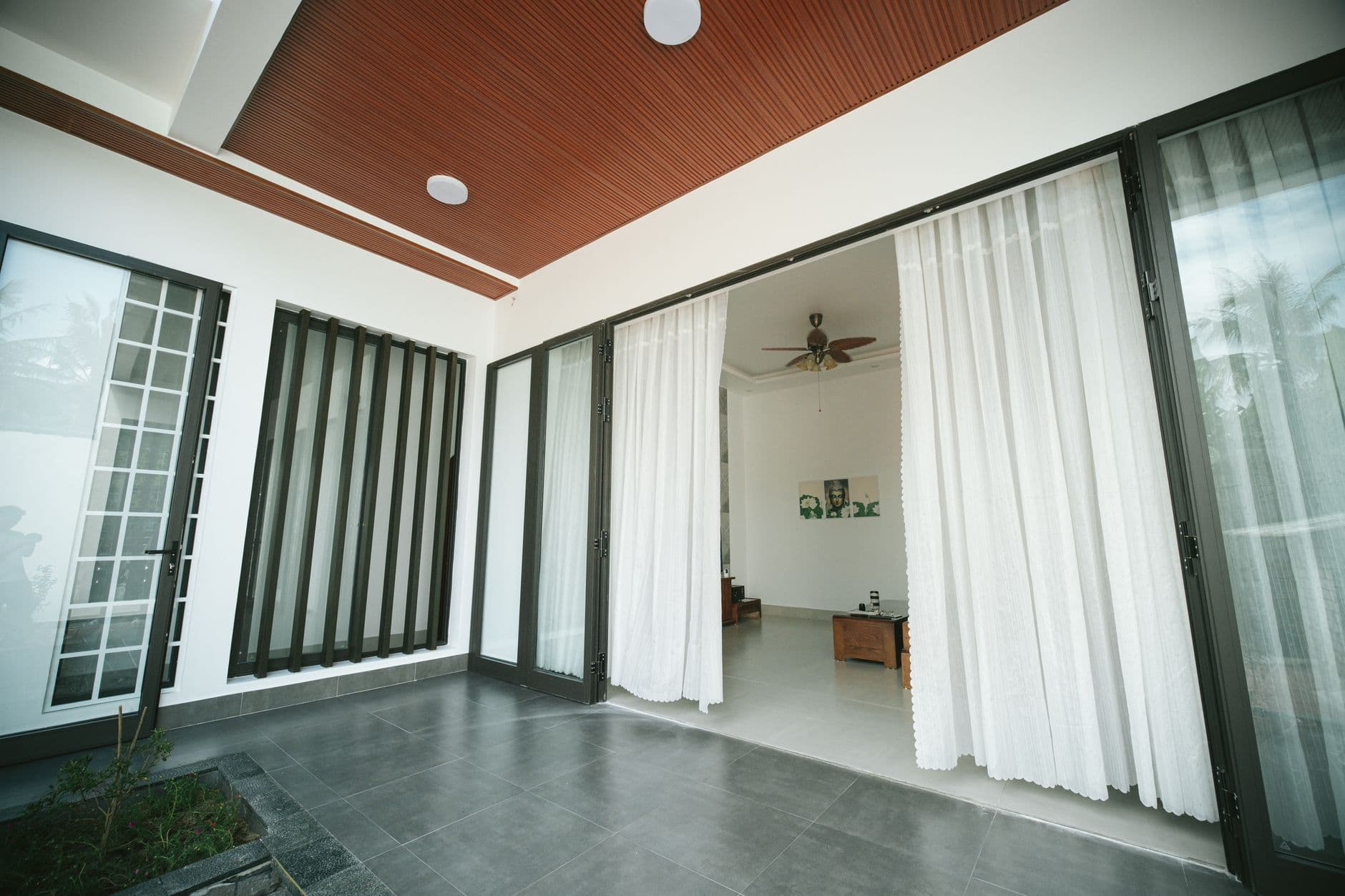
Most sliding glass door problems are repairable — but not all of them. If your door is hard to slide, won't latch properly, or has developed foggy glass, the right answer depends on what's actually failing. Some issues cost very little to fix and can be handled in an afternoon. Others are signals that the door has reached the end of its useful life. Here's how to tell the difference.
When Repair Is Almost Always the Right Call
Worn rollers are one of the most common reasons sliding doors become difficult to operate. The rollers sit inside the bottom of the door panel and ride along the track. Over time, they flatten, crack, or seize up — especially on doors that see heavy daily use. Replacing them is a straightforward job: the door panel is lifted out, the old rollers are swapped, and the door is reinstalled and adjusted. Roller replacement kits are widely available for most door brands and are worth doing before assuming the door itself is finished.
Dirty or bent tracks are another fixable problem. Grit, debris, and corrosion accumulate in the bottom track and can make even a good-rollered door feel like it's dragging through sand. Cleaning the track thoroughly and applying a silicone-based lubricant (not WD-40, which attracts more debris) often makes an immediate difference. If the track is mildly bent, a rubber mallet and a block of wood can sometimes correct it. Deep gouges or significant deformation may require track replacement, which is more labor-intensive but still a repair rather than a replacement.
Broken latches and locks are almost always a parts-and-labor fix. Latch mechanisms wear out, handles break, and lock cylinders fail. Replacement hardware is available at most home improvement stores, and a matching set can often be installed with basic tools.
The Harder Call: Seals, Glass, and Frame Damage
Failed weatherstripping is fixable and shouldn't be ignored — gaps let in cold air, moisture, and insects. But if you've already replaced the weatherstripping and the door still drafts badly, look more carefully at the frame. Warped or out-of-square frames, especially on older aluminum-framed doors, can prevent a proper seal regardless of how new the stripping is.
Foggy or cloudy glass between the panes means the insulated glass unit (IGU) has failed — the inert gas has escaped and moisture has entered the sealed space. This is not something that can be cleaned or fixed from the outside. The IGU needs to be replaced, which is a job for a glass company. If the rest of the door is in good shape, this is worth doing. If the frame is also failing, it changes the math.
Frame damage is where the repair-or-replace decision gets serious. Aluminum frames that are severely bent or corroded and vinyl frames that have cracked or warped beyond adjustment often can't be brought back to proper function. If the door panel no longer sits square in the frame, or if the frame itself has separated from the wall opening, you're looking at a replacement.
What Homeowners Commonly Get Wrong
One frequent mistake is lubricating a sticky door without cleaning the track first. Lubricant applied over debris just creates a gummy paste that makes things worse.
Another is replacing weatherstripping without checking roller height. Rollers that are set too low put the door in the wrong position relative to the frame — the door will never seal properly regardless of what you put around the edges. Most roller assemblies have an adjustment screw that raises or lowers the panel; getting that right is often the missing step.
Finally, some homeowners assume that because a sliding door is old, it needs to be replaced. Age alone isn't the determining factor. A 30-year-old door with a solid frame, intact glass, and a few worn parts may be entirely worth repairing. A 10-year-old door with a compromised frame or water-damaged rough opening is a different story.
When to Replace Instead
Replace the door when two or more major components have failed simultaneously, when the frame is structurally compromised, when the rough opening shows signs of water intrusion or rot, or when the door is so far out of production that parts are no longer available. At that point, the cumulative repair cost typically approaches or exceeds the cost of a new door — and a new door will perform better.
If you're not sure what you're dealing with, a hands-on look at the rollers, track, frame, and glass seals will usually make the answer clear. EVN Handyman handles sliding glass door repairs throughout the Portland metro area if you'd like a professional assessment before committing to a repair or replacement.